
Wooden garden pools
A pool that belongs
in your garden.
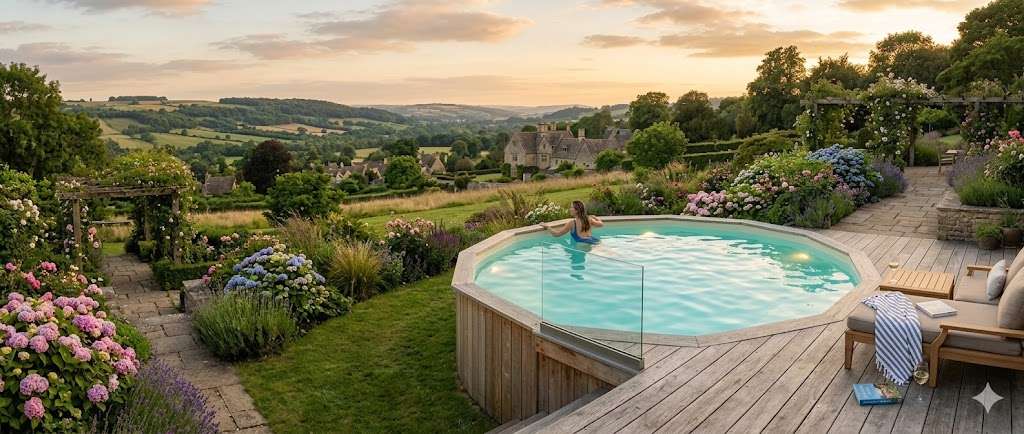
Natural timber, thoughtful engineering, and a scale that works for British gardens. Not a statement — just a really beautiful place to spend your summer.
Made for UK gardens. Built to last decades.
We've been helping UK families find their ideal wooden pool for over a decade. In that time we've learned what makes a garden pool work in this climate, in these spaces, for these lives.
The answer, consistently, is natural timber. It ages well in British weather. It sits quietly in a planting scheme. It doesn't look like a leisure centre. And when it's right, it makes the garden.
We stock three ranges — Essentials, Premium, and Signature — each with multiple shapes and sizes. Above-ground or in-ground. Round, oval, octagonal, or rectangular. Our Pool Finder will suggest the best fit for your garden and budget in a few minutes.
How much space do you need for a garden pool?
Less than most people assume. The common mistake is measuring the pool and stopping there — what actually determines whether a garden pool works is the pool plus the space around it. Allow at least a metre of clear access on one side for the pump and filter, and somewhere sensible to stand, dry off and get in and out. Below is what tends to work in real British gardens.
Compact garden
- Plot
- From about 6 m × 6 m
- Pool
- 3.6 m round · 1.2 m deep
- Comfortable for
- Couple or family of 3–4
The pool becomes the feature rather than competing with the rest of the garden. Genuinely swimmable — not a paddling pool.
Typical UK garden
- Plot
- From about 8 m × 10 m
- Pool
- 5 m round or 6 m × 3.5 m oval
- Comfortable for
- Family of 4–6
Room for the pool, a metre of surround, and still a usable lawn. This is where most of our customers land.
Large garden
- Plot
- 12 m × 15 m and up
- Pool
- 8–10 m × 4–5 m rectangular
- Comfortable for
- Six or more, proper lengths
Enough space to treat the pool as a designed terrace with decking, planting and seating around it.
Don't forget delivery access. Pool kits arrive on a pallet. Check you have a route from the road to the garden that is wide enough and firm enough — side returns, narrow gates and steep steps are worth measuring before you order, not after.
Where to put a pool in the garden
Siting decides how much you use the pool. A pool in the wrong corner gets swum in twice a summer; the same pool ten metres away gets used every warm evening. Six things worth walking the garden with before you decide:
Sun, especially afternoon sun
A south or west-facing spot picks up free heat and dries the surround quickly. Water in permanent shade is noticeably colder and takes far more heating to be pleasant.
Distance from trees
Leaf fall is the single biggest source of ongoing cleaning work, and roots complicate the base. Keep clear of large deciduous trees where you can, or budget for a debris cover.
Ground that is already close to level
Every centimetre of fall you have to correct adds cost. A naturally flat area is worth more than a slightly better view.
Power and water
The pump and heat pump need a weatherproof supply installed by a qualified electrician. The closer to an existing supply, the cheaper and tidier the installation.
Sightlines from the house
Being able to see the pool from the kitchen matters more than people expect — for supervision, and because you use what you can see.
Privacy and neighbours
A pool raised a metre above the lawn changes sightlines in both directions. Planting, a screen or a fence can be designed in from the start rather than added apologetically later.
Above ground, semi-sunken, or fully in-ground?
Our wooden pools can be installed all three ways, and the decision is as much about the garden as the budget. A sloping plot often suits a semi-sunken installation, where the pool is dug into the high side and decked out on the low side — you get the flush look of an in-ground pool for a fraction of the excavation.
Above ground
- Relative cost
- Lowest
- Install time
- 1–3 days
No excavation, no planning application in most cases, and the pool can be moved later. The raised wall is also a genuine safety benefit with small children.
Flat gardens, fastest route to swimming, tightest budgets.
Semi-sunken
- Relative cost
- Middle
- Install time
- 1–2 weeks
Set partly into the ground and decked to meet the higher side. Reads as a designed terrace rather than a pool sitting on a lawn, without a full excavation.
Sloping gardens, and anyone who wants the in-ground look for less.
Fully in-ground
- Relative cost
- Highest
- Install time
- 2–4 weeks
Flush with the surrounding level for the most integrated result. Needs excavation, spoil removal and a properly engineered surround, so costs and timescales rise accordingly.
Larger budgets and gardens being landscaped anyway.
What does a garden pool actually cost?
The pool is roughly two thirds of a realistic budget. The other third is the things that turn a pool into something you use — the base, the filtration, the cover, the power supply, and ideally the heating. Here is how a typical project breaks down, so nothing arrives as a surprise halfway through.
The pool itself
Essentials from £3,000, Premium from £6,000, Signature from £12,000. Includes the timber structure, liner and fittings.
From £3,000
Base preparation
Compacted sub-base at the lower end; a reinforced concrete slab or a sloping site at the upper end.
£300 – £2,500
Filtration and plumbing
Pump, filter and pipework, sized to turn the pool volume over about twice a day.
£300 – £900
Electrical supply
An outdoor weatherproof supply installed by a qualified electrician. Costs rise with distance from the consumer unit.
£250 – £700
Cover
A solar cover is the cheapest thing that makes the biggest difference. Safety and winter covers cost more.
£80 – £900
Heating (optional)
An inverter heat pump. Optional on paper, but the difference between swimming eight weeks a year and swimming six months.
£900 – £3,000
Decking and surround
Anything from a paved standing area to a full timber terrace. This is where budgets stretch, so decide early.
Highly variable
For comparison. A traditional excavated and tiled in-ground pool, including groundworks, plant room, surround and landscaping, regularly runs to £30,000–£80,000 and takes six to twelve months. A wooden garden pool delivers the same swimming for a fraction of both.
Planning permission for a garden pool
For an above-ground garden pool the answer is usually straightforward: no application needed. Above-ground pools are generally not treated as permanent structures, and most domestic gardens fall within permitted development rights.
It gets more involved if you are excavating for an in-ground pool, if the property is listed or in a conservation area, a national park or an area of outstanding natural beauty, or if you want to enclose the pool in a building or a substantial structure. Any of those is worth a conversation with your local planning authority first.
Two other things worth checking regardless: whether your deeds carry restrictive covenants — some newer estates do — and what conditions your home insurer applies to a domestic pool. Neither is planning law, and both are easier to sort out before the pool arrives than afterwards.
This is general guidance rather than legal advice. Rules vary between authorities and change over time, so confirm your own position before you commit.
Our ranges
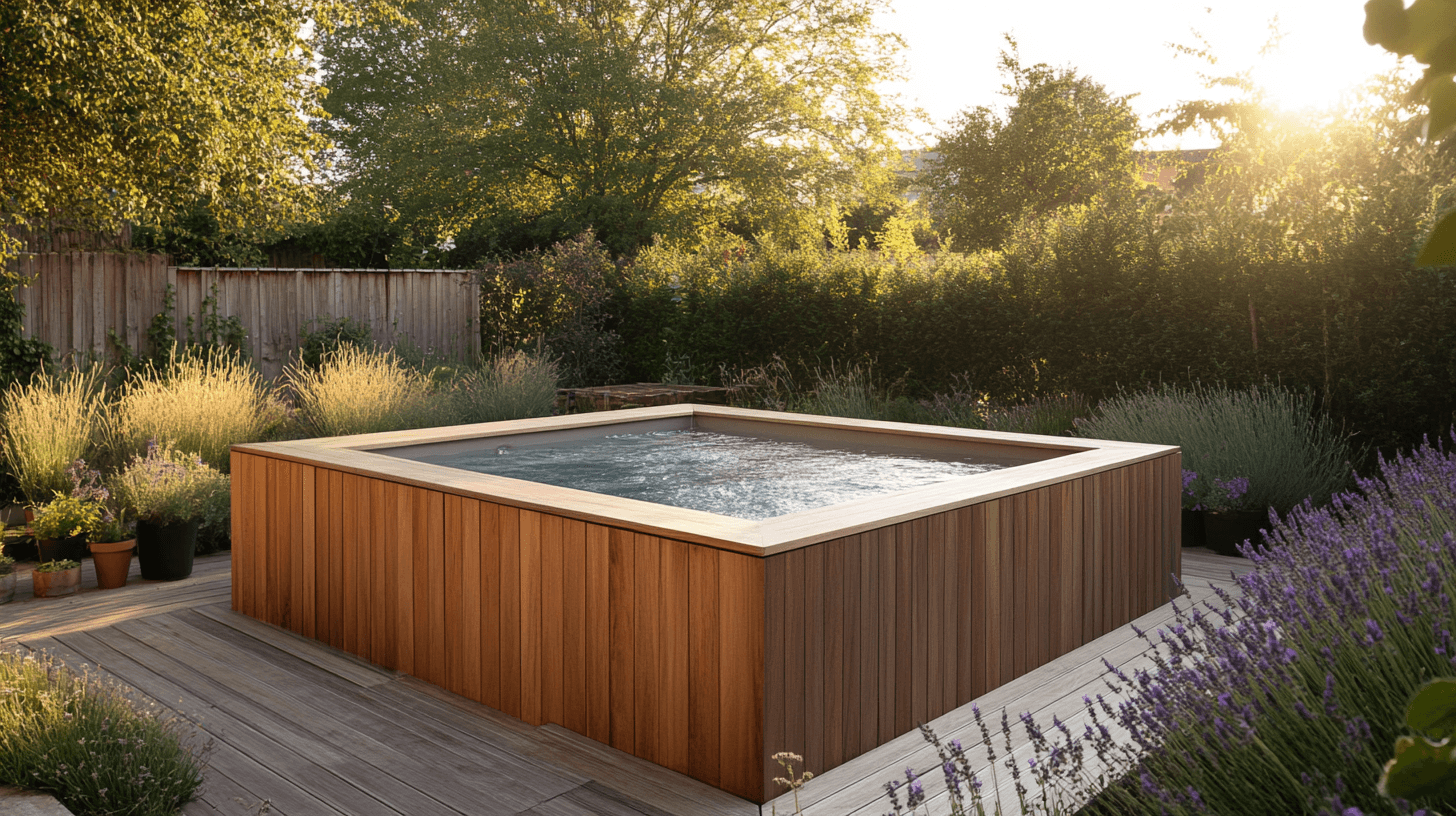
Essentials
The entry point to wooden pool ownership.
Thoughtfully specified, honestly priced, and beautifully made. If you want to understand whether a pool is right for your garden before committing to a larger investment — start here.
Above-ground or in-ground · Multiple sizes · From £3,000
Browse Essentials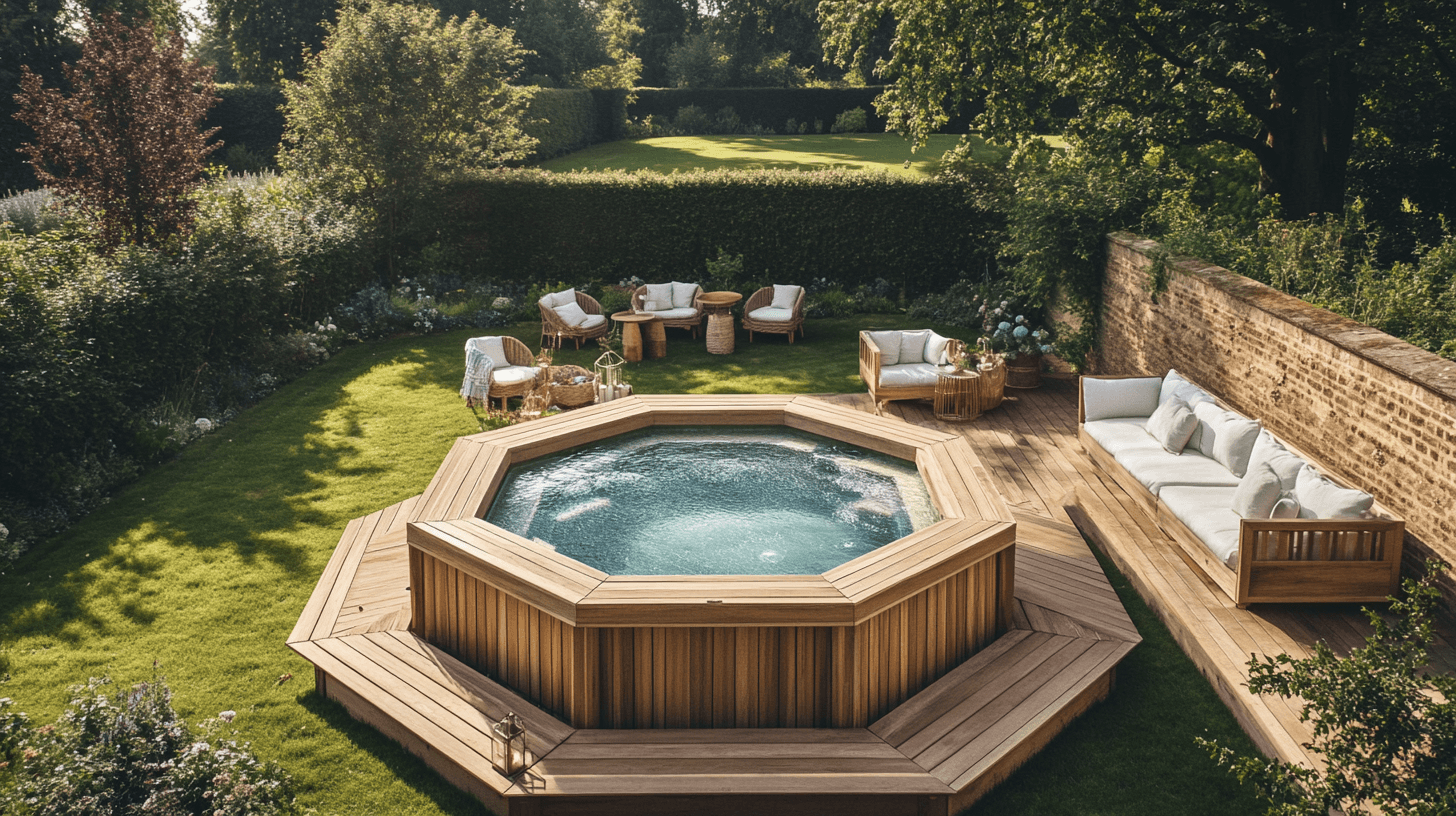
Premium
For families who know they want a pool.
Larger footprints, greater depths, more options. The Premium range is where most of our customers land — it offers the most flexibility without the premium of the Signature tier.
Above-ground or in-ground · Deep-water options · From £6,000
Browse Premium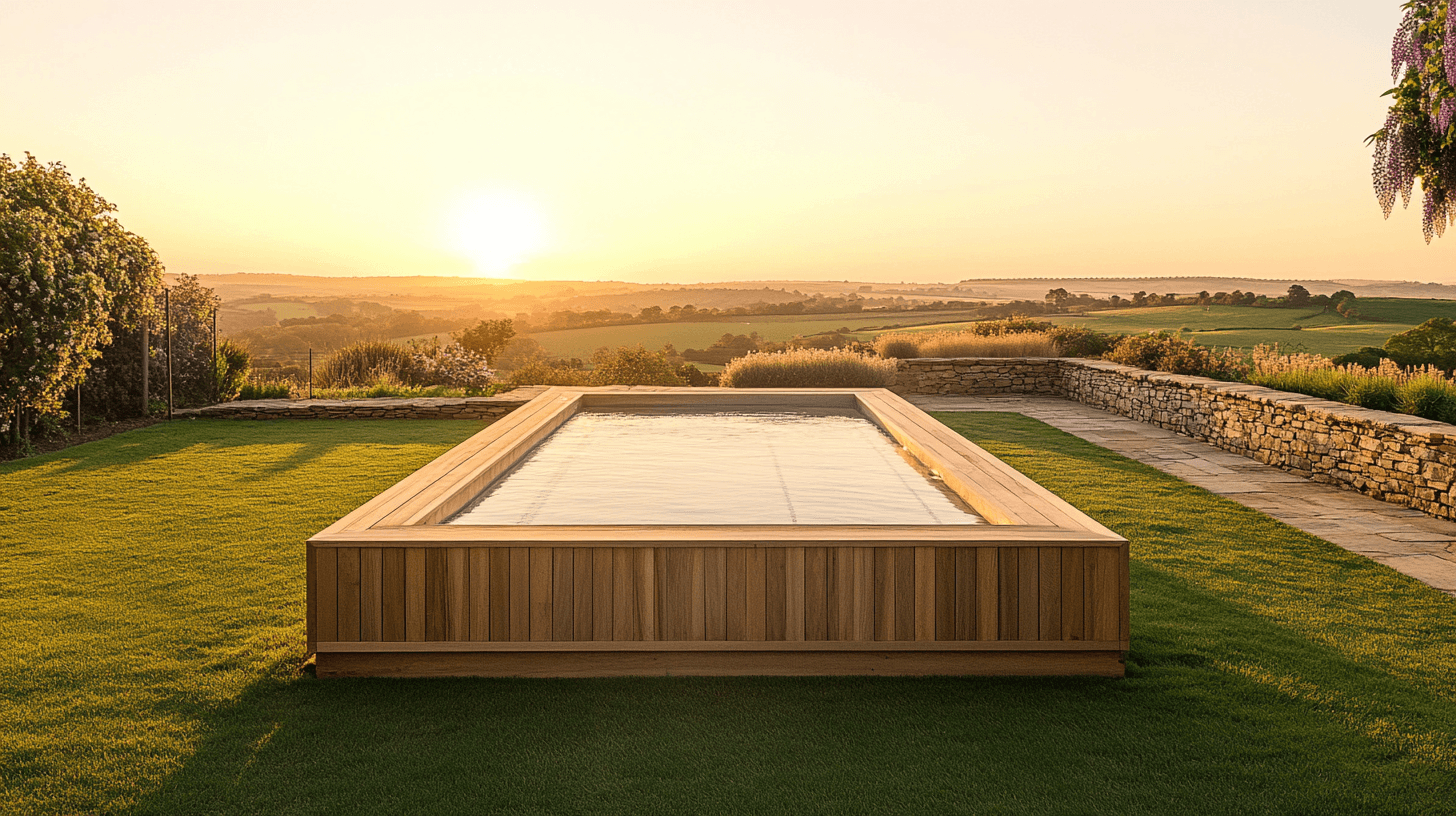
Signature
Our finest work.
The Signature pools are built with the best available Nordic timber, offer the most generous dimensions in the range, and come in shapes that make a real architectural statement. If you want the pool to be the centrepiece of the garden, this is it.
Above-ground or in-ground · Architectural shapes · From £12,000
Browse SignatureReal gardens. Real pools.
See how ours look in the wild.
500+ pools installed across the UK. Browse our gallery for installation ideas in gardens just like yours.
View the gallery →Making a pool look like part of the garden
The difference between a pool that looks designed and one that looks parked is rarely the pool. It is what happens in the two metres around it. A few things that consistently work:
Anchor it to something. A pool in the middle of a lawn always looks like an object. Set against a boundary, tucked into a corner, or aligned with a terrace or a level change, it reads as part of the garden's structure.
Deck at least one side. Even a modest deck on the entry side gives somewhere to sit, dry off and put things down, and visually ties the timber of the pool into the garden. Decking the full perimeter is lovely but rarely necessary.
Plant to soften, not to shade. Grasses, low evergreens and structural planting on two or three sides break up the outline without dropping leaves into the water. Keep anything large and deciduous well back.
Hide the plant. The pump and filter want to be within about a metre of the pool, dry and ventilated — a simple slatted timber housing that matches the pool solves this and costs very little.
Light it properly. Low-level lighting along the deck edge extends the evening use of the pool far more than lighting the water does, and it is the safer of the two.
Garden pool questions
How much space do you need for a garden pool?
Less than most people assume. A 3.6 m round pool works in a garden of around 6 m x 6 m, and a 5 m round pool sits comfortably in a 7 m x 7 m space. The pool itself is only part of the calculation — allow at least one metre of clear access around the perimeter for the pump housing and maintenance, plus somewhere to stand and get in and out.
Where is the best place in the garden for a pool?
Somewhere flat, sunny for most of the afternoon, away from large trees, and within reasonable reach of power and a water supply. South or west-facing spots gain the most free heat. Keep the pool clear of overhanging branches — leaf fall is the single biggest source of ongoing cleaning work — and think about privacy and where you will actually want to sit.
Do I need planning permission for a garden pool in the UK?
For an above-ground garden pool, usually not — these are generally not treated as permanent structures and most gardens fall within permitted development. In-ground pools, and anything in a conservation area, on listed property, or involving a building or enclosure, are more likely to need consent. Always confirm with your local planning authority before you commit.
What does a garden pool cost all in?
The pool is roughly two thirds of a realistic budget. Our wooden pools start from £3,000, and a sensible all-in figure adds base preparation, filtration, a cover, and an electrical supply. Heating and decking are the two things that most often get left out of an initial budget and most often get added later — it is worth pricing them in from the start.
Can you put a swimming pool in a small garden?
Yes. Small does not mean compromised — a 3.6 m or 4 m pool at 1.2 m deep is genuinely swimmable, and in a compact garden the pool becomes the whole feature rather than competing with one. Our Essentials range is designed exactly for this, and the Pool Finder will filter by the space you actually have.
How long does it take to get a garden pool installed?
Typically 6–10 weeks from order to delivery, then 1–3 days to install once the base is ready. Base preparation is the item to plan around — allow a day or two, and longer if you are having a concrete slab laid and cured. Compare that with 6–12 months for a traditional in-ground pool build.
Will a pool ruin the rest of the garden?
It does not have to. A wooden pool set into decking, softened with planting on two or three sides, reads as part of the garden rather than equipment parked on the lawn. The mistake is treating the pool as a standalone object in the middle of a space — anchoring it to a corner, a terrace or a level change almost always looks better.
Can a garden pool be moved or removed later?
An above-ground wooden pool can be dismantled and relocated, which is one of its real advantages over an in-ground pool. Few customers do it, but if you might move house or want to reshape the garden in ten years, it is a genuine option rather than a demolition job.
Looking specifically at above-ground options? Read our above ground pools guide — or if it's the timber itself you want to know about, see how our wooden pools are built.
Not sure yet? That's fine.
Most people spend a bit of time thinking before committing to a garden pool — which makes sense. Our Pool Finder is a good starting point: it'll take a few minutes and give you a shortlist of models that suit your space and what you want from a pool. Or, if you'd rather just talk to someone, drop us a message.